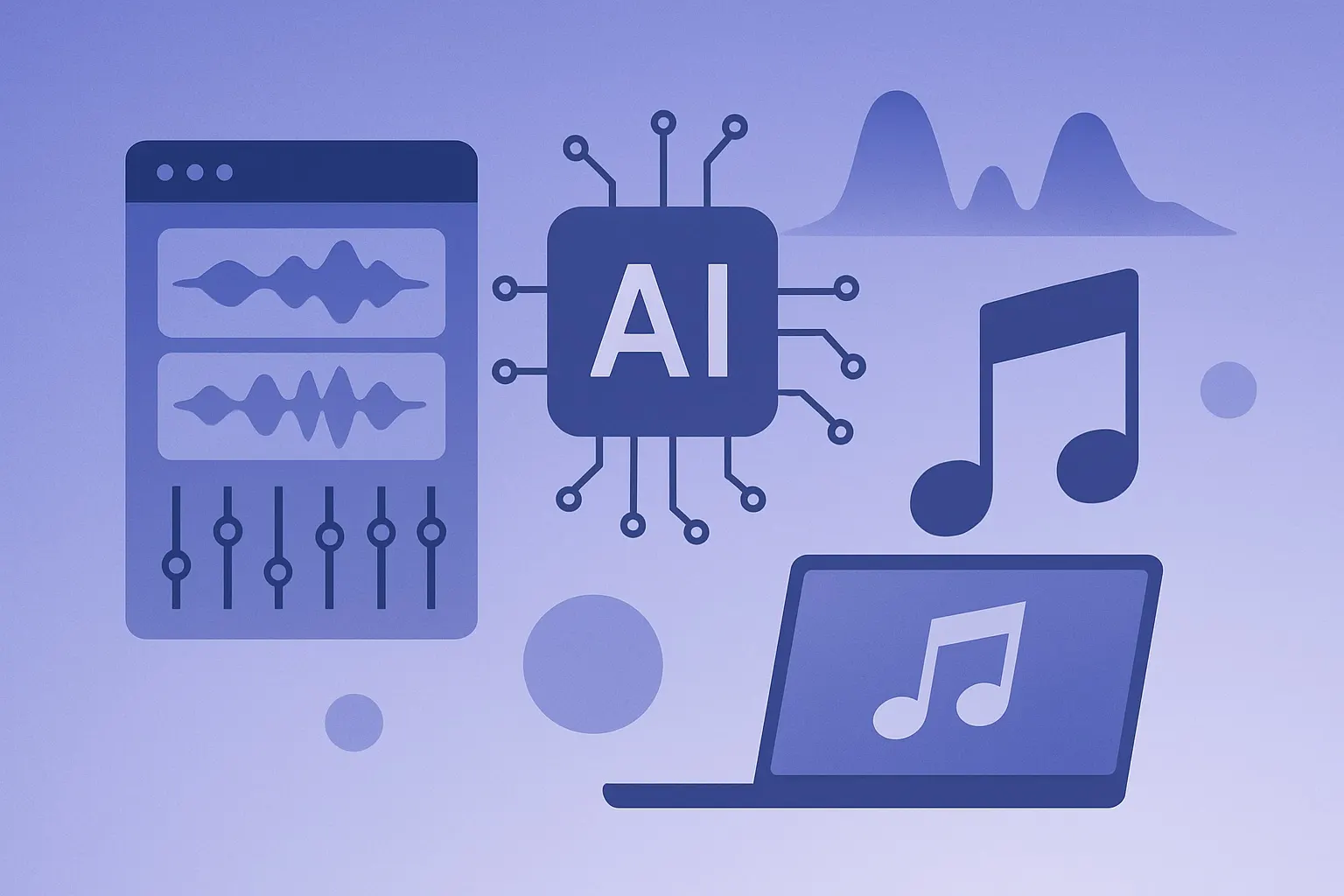
The world of music production has always been at the forefront of technological innovation. From the synthesizer to the digital audio workstation (DAW), technology has consistently opened new doors for creative expression. Today, we're in the midst of another revolution, this one powered by artificial intelligence. AI is no longer just a futuristic concept; it's a practical and powerful toolkit that artists, producers, and engineers are using to push creative boundaries.
Whether you're a seasoned producer or a bedroom artist just starting out, AI tools can streamline your workflow, inspire new ideas, and add a professional polish to your tracks. Let's explore some of the most exciting ways AI is shaping the future of sound.
AI-Powered Vocal and Sample Generation
One of the most groundbreaking applications of AI in music is in the creation of realistic vocal tracks and unique samples. For years, generating authentic-sounding vocals without a singer was a significant challenge. High-quality sample packs were the standard, but they often lacked flexibility.
AI voice generators have completely changed the game. Tools like ElevenLabs allow you to generate incredibly lifelike speech and singing from text, customize vocal characteristics, and even clone your own voice securely. This technology is perfect for creating placeholder vocal melodies, generating background harmonies, or even producing final vocal tracks for certain styles of music. Instead of spending hours searching for the perfect acapella, you can now generate a custom one in minutes.Similarly, AI is transforming sample hunting. Instead of digging through crates of old records or endlessly scrolling through sample libraries, AI-driven platforms can generate entirely new, royalty-free sounds based on your creative input. This not only speeds up the workflow but also ensures your tracks have a unique sonic signature.
Intelligent Mixing and Mastering
Mixing and mastering are the crucial final steps that can make or break a track. These processes traditionally require years of experience and a finely tuned ear. AI is now making professional-sounding masters accessible to everyone.
AI mastering services use algorithms trained on thousands of hit songs to analyze your track and apply intelligent equalization, compression, and stereo widening. The result is a loud, clear, and balanced master that's ready for distribution on platforms like Spotify and Apple Music.
But AI isn't just for the final master. Tools are emerging that can assist during the mixing process itself. For instance, some plugins can automatically identify and clean up problematic frequencies in a recording, saving you tedious editing time. For podcasters and video creators, tools like Descript use AI to provide "Studio Sound," a feature that removes background noise and enhances speech clarity with a single click, making your audio sound like it was recorded in a professional studio.
AI for Creative Inspiration
Beyond the technical aspects of production, AI can be a powerful creative partner. Stuck with writer's block? There are AI tools that can generate novel chord progressions, drum patterns, and melodic ideas to get your creativity flowing.
These "co-composer" tools don't write the song for you. Instead, they provide a starting point or a fresh perspective when you need it most. You can feed them a simple melody and have the AI generate a full arrangement around it, or ask for a bassline in a specific style to complement your existing track. For creators looking to build a comprehensive brand, this creative partnership can extend beyond music. You could use an AI tool like Notion AI to brainstorm marketing copy, write social media posts, or even draft a music video concept based on your song's lyrics.
The Future is Collaborative
The rise of AI in music production isn't about replacing human creativity; it's about augmenting it. These tools handle the repetitive, time-consuming tasks, freeing up artists to focus on what truly matters: the vision, the emotion, and the story behind the music.
By embracing these technologies, you can work faster, experiment more freely, and bring the sounds you hear in your head to life more effectively than ever before. The future of music is a collaboration between the artist and the intelligent machine, and it's never been a more exciting time to create.