If you've ever needed background music for a YouTube video, a podcast intro, or a game project, you know the pain: licensing is expensive, royalty-free libraries all sound the same, and hiring a composer isn't exactly budget-friendly. AI music generators have changed that equation completely.
This post contains affiliate links. We may earn a small commission at no extra cost to you.In 2026, these tools can produce studio-quality tracks from a text prompt in under a minute. Some can clone styles, extend compositions, and even generate vocals. Whether you're a content creator, indie game developer, or just someone who likes making weird beats at 2 AM, there's an AI music tool for you.
Here's a breakdown of the best options available right now.
What AI Music Generators Actually Do
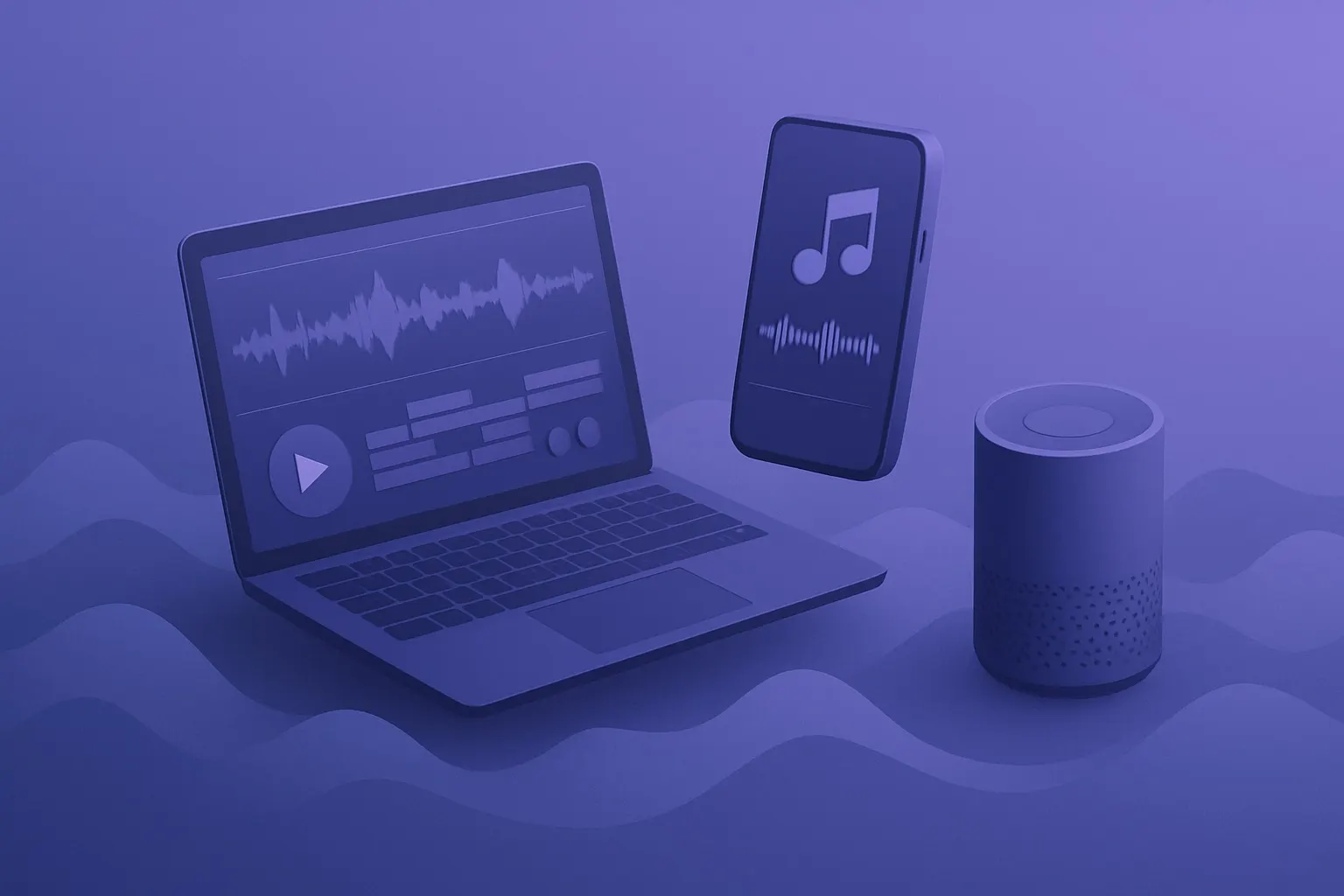
At their core, these tools use generative models trained on massive audio datasets. You provide a prompt — something like "upbeat electronic track with a retro 80s vibe, 120 BPM" — and the model outputs a full audio file. Some go further, letting you control instrumentation, mood shifts, song structure, and duration.
The technology has matured fast. Early AI music sounded robotic and repetitive. Current models produce tracks that are genuinely hard to distinguish from human-composed music, especially for background and ambient use cases.
Top AI Music Generators Worth Trying
Suno
Suno remains the most popular consumer-facing AI music tool. Its v4 model generates full songs with vocals, instrumentals, and surprisingly coherent lyrics. The free tier gives you a handful of generations per day, and the Pro plan unlocks longer tracks, higher quality exports, and commercial licensing.
Best for: Content creators who need complete songs with vocals.Udio
Udio carved out a niche by focusing on audio fidelity. Its generations tend to sound more polished and less compressed than competitors. The interface lets you extend and remix sections, which is useful when you need a track to hit a specific length. Udio's genre range is also impressive — everything from jazz to hyperpop.
Best for: Anyone who prioritizes production quality.AIVA
AIVA takes a more structured approach. Instead of freeform prompts, you choose a style, adjust parameters, and let the AI compose a full orchestral or electronic piece. It's been around longer than most competitors, and its classical and cinematic output is hard to beat. AIVA offers royalty-free licensing on paid plans. Best for: Film, game, and podcast producers who need cinematic scores.Stable Audio (by Stability AI)
Stability AI brought the same open-source philosophy from Stable Diffusion into audio. Stable Audio 3 generates high-quality tracks and sound effects from text prompts. The open model means developers can fine-tune it for specific use cases, and there's an active community building tools on top of it.
Best for: Developers and tinkerers who want customization.ElevenLabs Sound Effects + Music
ElevenLabs is primarily known for voice cloning and text-to-speech, but their audio generation capabilities have expanded into music and sound design. If you're already using ElevenLabs for voiceovers on your content, adding AI-generated music and sound effects from the same platform streamlines the whole workflow. Best for: Creators already using ElevenLabs for voice who want an all-in-one audio toolkit.How to Choose the Right Tool
The "best" generator depends on what you're making:
- YouTube videos and social content: Suno or Udio. Both are fast, produce ready-to-use tracks, and handle commercial licensing clearly.
- Games or films: AIVA or Stable Audio. You'll want more control over composition structure and the ability to generate variations.
- Podcasts: Any tool works for intros and outros, but AIVA's structured approach makes it easy to get consistent branding music.
- Experimentation and fun: Suno's vocal generation is wildly entertaining. You can make a country song about your cat in 30 seconds.
The Licensing Question
This matters more than most people realize. Just because an AI generated a track doesn't mean you automatically own it or can use it commercially. Each platform has different terms:
- Suno Pro and Udio Pro both grant commercial rights on paid plans.
- AIVA offers full copyright ownership on its higher-tier plans.
- Stable Audio — open-source model users need to check specific license terms.
If you're monetizing content, read the fine print before publishing.
Learning More About AI Audio
If you want to understand the technology behind these tools — how diffusion models work for audio, what latent audio representations look like, and where the field is heading — a solid technical foundation helps. Generative Deep Learning by David Foster covers the fundamentals in an approachable way.
For a broader perspective on how AI is reshaping creative industries, The Creativity Code by Marcus du Sautoy is a great read that explores the intersection of artificial intelligence and artistic expression.
What's Coming Next
The trajectory is clear: more control, better quality, longer generations. We're already seeing models that can take a hummed melody and turn it into a full arrangement. Expect real-time collaboration features — where you and an AI jam together — to become standard within the next year.
Vocal quality is the frontier. Current AI vocals are good for pop and electronic genres but still struggle with the nuance of jazz or soul singing. That gap is closing fast.
Bottom Line
AI music generators in 2026 are genuinely useful tools, not just tech demos. For anyone creating content, building games, or producing media on a budget, they eliminate one of the most annoying bottlenecks in the creative process. The quality is there, the speed is there, and the pricing makes sense.
Try a couple of the free tiers, see which output style matches your needs, and go from there. You might be surprised how good a text prompt sounds.